| Botanical identity |
Eurycoma longifolia Jack |
Correct botanical identification helps prevent substitution with unrelated herbs or incorrectly labeled plant materials. |
| Common names |
Tongkat Ali, Eurycoma, Malaysian ginseng, and longjack |
A manufacturer should clearly distinguish common names from the accepted botanical name on specifications and labels. |
| Plant family |
Simaroubaceae |
Family-level confirmation supports botanical traceability and identity testing. |
| Raw material used |
Traditionally, the root or root bark is used; commercial products commonly specify root extract. |
The plant part should be stated because root, stem, leaf, and bark materials may have different chemical profiles. |
| Geographical origin |
Native to parts of Southeast Asia, including Malaysia, Indonesia, Thailand, and surrounding regions. |
Origin records and harvest documentation help verify authenticity, supply continuity, and sustainability practices. |
| Product form |
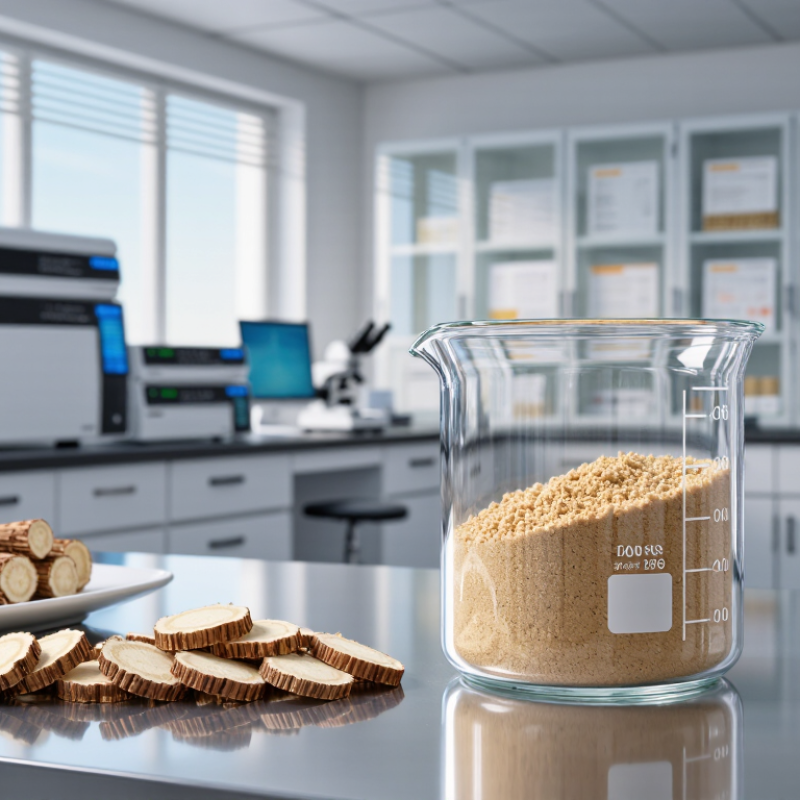
Fine brown to yellow-brown powder with a characteristically bitter taste and earthy odor. |
Appearance, odor, moisture, and particle-size specifications support batch-to-batch consistency. |
| Extract definition |
A concentrated preparation produced by extracting compounds from Tongkat Ali root and subsequently drying the extract into powder. |
Buyers should confirm whether the material is a simple dried root powder or a solvent-based extract. |
| Extraction methods |
Water extraction and hydroalcoholic extraction are commonly used; the process may include filtration and spray drying. |
The solvent system, extraction temperature, concentration ratio, and drying conditions affect the final chemical profile. |
| Common specification formats |
Whole-root powder, extract ratio such as 10:1 or 20:1, and marker-compound-standardized extract. |
An extract ratio alone does not prove potency; analytical marker results should also be provided. |
| Key phytochemicals |
Reported constituents include quassinoids such as eurycomanone, along with β-carboline alkaloids and other plant compounds. |
A reliable supplier should define the tested marker, analytical method, and acceptance range rather than relying only on marketing terminology. |
| Identity testing |
Typical approaches include macroscopic or microscopic examination, chromatographic fingerprinting, and botanical or DNA-based testing where appropriate. |
Identity testing reduces the risk of adulteration, mislabeling, and accidental substitution. |
| Purity and safety testing |
A complete quality program commonly covers heavy metals, pesticides, microbial limits, aflatoxins, residual solvents, and unauthorized adulterants. |
Independent laboratory results and batch-specific certificates of analysis are important for food, supplement, and cosmetic applications. |
| Manufacturing standards |
Relevant controls may include Good Manufacturing Practice, documented sanitation, traceability, validated procedures, and controlled storage. |
A documented quality system is more meaningful than a product description alone when comparing manufacturers in 2026. |
| Moisture and storage |
Powdered botanical extracts should generally be protected from heat, direct light, oxygen, and humidity in sealed packaging. |
Moisture control helps limit caking, microbial growth, and deterioration during transportation and storage. |
| Sustainability considerations |
Because roots are harvested below ground, responsible sourcing should address cultivation, harvest limits, replanting, and supply-chain traceability. |
Sustainability documentation helps reduce pressure on wild populations and supports long-term raw-material availability. |
| Regulatory and labeling review |
Permitted claims, ingredient status, dosage directions, warnings, and import requirements vary by destination market. |
Manufacturers should provide documentation that supports the buyer’s intended market without making unapproved disease or performance claims. |