
Botanical Extract
& Health Blog
Latest research, market trends, and sourcing guides for nutraceutical and botanical ingredients.
Explore Products
Nutraceutical
Knowledge Base
Expert articles on standardized extracts, functional mushrooms, and synthetic active ingredients.
View Certifications
Global Sourcing
& Market Trends
Stay updated with regional warehouse inventory, FDA compliance, and B2B market updates.
Learn MoreChina Top 10 Pure NAD+ Powder Suppliers for Global Buyers
Table of Contents
- What Is Pure NAD+ Powder and Why Does Purity Matter?
- How to Evaluate NAD+ Powder Suppliers in China
- China’s Top 10 Pure NAD+ Powder Suppliers for Global Buyers
- Quality Standards, Testing, and Regulatory Documentation
- How to Compare Pricing, Minimum Orders, and Export Services
- FAQS
- Conclusion
- Related Posts
Global buyers need more than a low price when evaluating Pure NAD+ Powder suppliers. They need evidence that supports every quality claim. Dr. Charles Brenner, a leading NAD metabolism researcher, has stated, “NAD is a central metabolite in every living cell.” This scientific context explains why material identity, purity, and stability deserve careful attention.
This guide reviews ten suppliers serving international buyers. It considers manufacturing experience, documented quality systems, testing capacity, and export readiness. Useful records may include a batch-specific certificate of analysis, HPLC or LC-MS results, residual-solvent data, heavy-metal screening, and microbiological testing. Clear traceability matters too. Can the supplier identify the production batch, packaging date, and storage conditions?
Small details matter.
A reliable vendor should explain whether the material is intended for research, manufacturing, or another legally permitted use. Product classification differs across countries, so buyers must verify local requirements before ordering. GMP-related controls, audited facilities, secure packaging, and responsive technical support can reduce avoidable risks. However, supplier pages sometimes use broad purity language without showing test methods. That weakness should not be ignored.
No supplier is perfect. Even polished documentation may leave questions about stability, transport exposure, or specification changes. Buyers should request current records and compare them carefully. This overview is designed to support that process, not replace independent verification. The strongest supplier is not always the cheapest. It is the one that can consistently connect its claims with transparent, testable evidence.
What Is Pure NAD+ Powder and Why Does Purity Matter?
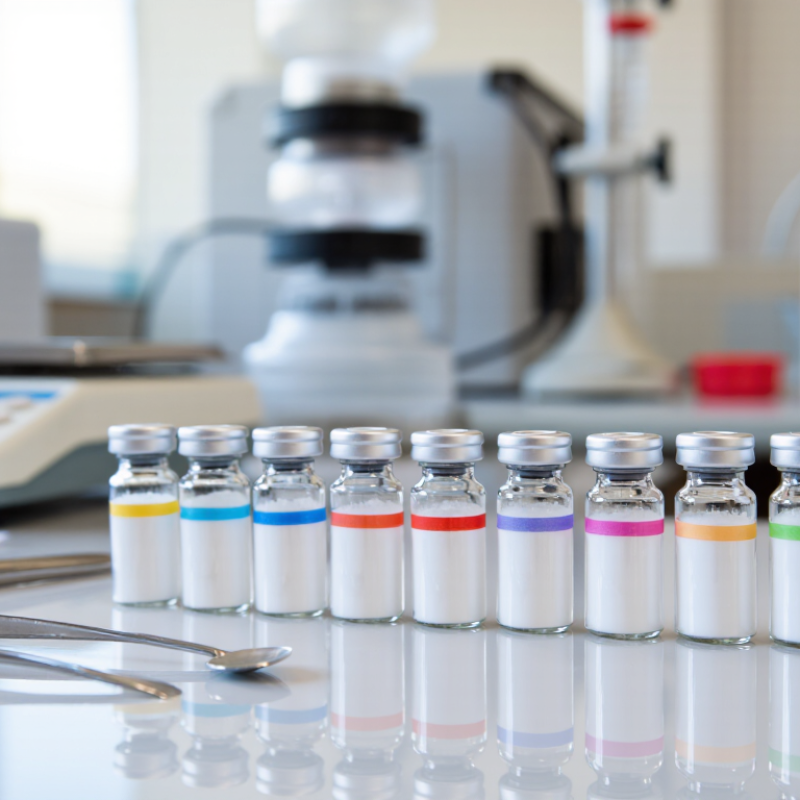
Pure NAD+ powder refers to nicotinamide adenine dinucleotide with a high assay level and controlled impurities.
It is usually supplied as a fine, moisture-sensitive powder for qualified research or manufacturing applications. Purity is not just a marketing number. It affects consistency, testing reliability, storage behavior, and batch-to-batch performance.
Global buyers should request an independent certificate of analysis for every lot. Useful evidence may include HPLC assay results, LC-MS identity confirmation, residual solvent data, heavy metal limits, and microbiological testing.
A clear batch number should connect the certificate, packaging, and production records.
Small details matter. An unclear test date is a warning sign.
NAD+ can degrade when exposed to heat, moisture, oxygen, or unsuitable light. Protective packaging, desiccants, cold-chain guidance, and defined retest periods deserve careful review.
Suppliers should also explain their quality system, traceability process, and corrective actions for failed batches.
No certificate replaces judgment. Some documents look complete but provide limited raw data, and buyers should question that gap.
Independent verification may cost more, yet it can prevent expensive formulation errors and rejected shipments. Purity also requires context: an impressive assay does not automatically prove suitable stability, identity, or handling quality.
How to Evaluate NAD+ Powder Suppliers in China
When evaluating China-based NAD+ powder suppliers, do not begin with price. Start with identity, purity, and traceability. Request a recent certificate of analysis for the exact batch offered. It should state the testing method, assay result, moisture, residual solvents, and relevant contamination limits. “High purity” is not enough.
Ask whether results come from validated HPLC or LC-MS testing. Independent laboratory verification adds useful distance from sales claims. Review the lot number, production date, raw material source, and storage conditions. The packaging should protect the powder from moisture, light, and unnecessary temperature changes. Small details matter. A sample can look excellent while later batches vary, so compare documents from several lots.
Reliable suppliers should explain their quality system without hiding behind certificates. Look for documented change control, deviation handling, cleaning procedures, and batch release records. Confirm whether the facility follows suitable GMP or ISO-based practices, where applicable, and whether export documents match your destination’s requirements. Communication is also evidence. Clear answers suggest experience; vague promises require caution. I would not treat a polished brochure as proof. Even experienced buyers can overlook stability data or transport exposure. Ask for realistic shelf-life evidence, defined storage instructions, and written responsibility if a shipment fails inspection.
China’s Top 10 Pure NAD+ Powder Suppliers for Global Buyers
China’s Top 10 Pure NAD+ Powder Suppliers for Global Buyers should be assessed through evidence, not promotional claims. Industry reports show strong growth in the NAD+ market, although estimates differ by product definition and research method. Grand View Research has reported a projected double-digit growth rate for the broader NAD+ market during the forecast period. That signal matters, but it is not proof of supplier quality.
Experienced buyers should request recent certificates of analysis, batch numbers, assay results, moisture levels, and microbial testing. High-purity NAD+ powder should be supported by HPLC or equivalent analytical data. Testing laboratories should provide traceable reports, not editable screenshots. Suppliers with stable export records may also show clearer packaging controls, temperature guidance, and documentation for customs review.
Small details matter.
The top ten should also be compared by production capacity, response time, technical support, and consistency between batches. A 2024 industry review from Research and Markets describes rising demand for NAD+-related ingredients in dietary and research applications, but market forecasts remain uneven. This is worth questioning. A low quoted price may hide weaker testing or shorter shelf-life evidence. Buyers should inspect samples under controlled conditions and confirm specifications before larger orders. No ranking is perfect; supplier information changes, and independent verification remains necessary.
Quality Standards, Testing, and Regulatory Documentation
China Top 10 Pure NAD+ Powder Suppliers for Global Buyers
Quality documentation separates reliable NAD+ suppliers from attractive sales claims. Grand View Research valued the global dietary supplements market at approximately USD 177.5 billion in 2023. This growth increases pressure on buyers to verify every lot, not just the supplier profile.
Ask for a batch-specific Certificate of Analysis. It should report NAD+ identity, assay, water content, residual solvents, heavy metals, and microbiological limits. HPLC or UPLC can quantify purity, while LC-MS or NMR offers stronger identity confirmation. USP Chapters <61> and <62> provide useful microbial testing frameworks. ICH Q3C and Q3D support solvent and elemental impurity assessments. Testing should occur in an ISO/IEC 17025-accredited laboratory.
Certificates alone are not proof.
A serious supplier should provide GMP evidence, manufacturing-site details, SDS files, traceability records, change-control procedures, and stability data. NAD+ powder may require moisture-protective packaging, controlled storage, and documented transport conditions. Review the original chromatograms, not only summarized percentages. Check whether the reported purity is assay-based or calculated on a dry basis. Those figures can differ.
Regulatory files also need attention. Intended use, market destination, ingredient classification, and labeling rules may vary by jurisdiction. The FDA dietary supplement GMP framework, 21 CFR Part 111, can guide documentation expectations, but it does not automatically approve every NAD+ product. A weakness remains common: many dossiers show impressive purity yet provide limited long-term stability evidence. Buyers should record this gap rather than assume compliance.
How to Compare Pricing, Minimum Orders, and Export Services
China Top 10 Pure NAD+ Powder Suppliers for Global Buyers
Comparing NAD+ powder suppliers requires more than checking the lowest price. Request a current quotation based on purity, assay method, packaging, and annual volume. A cheaper price may exclude testing, inner liners, or export documents. Ask for a COA, HPLC results, batch number, and retest date. Reliable suppliers should explain how samples match production batches. I have seen comparison sheets miss small fees, especially for customized labels and cold-chain requests. That mistake can change the landed cost.
Minimum orders also need careful review. Some suppliers accept small trial orders, while others require full cartons or larger production runs. Confirm sample costs, lead time, payment terms, and whether the MOQ changes for different packaging sizes. Export service matters just as much. Check commercial invoices, packing lists, certificates of origin, and shipping options. Confirm the proposed Incoterm, destination port, and responsibility for customs clearance. Documentation should be clear, consistent, and easy to verify.
Tips:
Compare the total delivered cost, not only the unit price. Keep one written checklist for every supplier. Ask for a recent sample before committing to volume. Verify storage instructions and transport conditions. A polished website is not proof of reliable performance. Check details twice. Suppliers that answer technical questions precisely are usually easier to manage. Still, no checklist is perfect; review your assumptions before signing.
FAQS
Pure NAD+ powder is a fine, moisture-sensitive material with a high assay level. It is used for qualified research or manufacturing applications. Purity affects consistency and batch performance. It is not only a marketing number.
Purity supports reliable testing, stable formulations, and consistent production results. A high assay alone is not enough. Identity, moisture, impurities, and storage behavior also matter. The full picture matters.
Request a batch-specific Certificate of Analysis with a clear lot number. Useful records include HPLC assay results and LC-MS identity confirmation. Also review water content, residual solvents, heavy metals, and microbiological limits. The test date should be easy to verify.
Ask for original chromatograms, not only summarized percentages. HPLC or UPLC can measure the assay. LC-MS or NMR can provide stronger identity confirmation. Independent laboratory testing adds another useful check.
The powder should receive protection from moisture, heat, oxygen, and unsuitable light. Packaging may include moisture barriers and desiccants. Review cold-chain guidance and defined retest periods. Keep storage instructions visible.
Review manufacturing-site details, GMP evidence, SDS files, and traceability records. Ask about change control and procedures for failed batches. Stability data should explain how the material behaves over time. Some files look complete but lack raw evidence.
Compare total delivered cost instead of unit price alone. Include testing, packaging, labels, transport, and export documents. Confirm sample fees, payment terms, lead time, and minimum order quantity. Small fees can change the final cost.
Confirm the commercial invoice, packing list, certificate of origin, and shipping method. Check the proposed Incoterm and destination port. Clarify responsibility for customs clearance and transport conditions. Written details reduce avoidable confusion.
No. A high assay does not automatically prove stability, identity, or handling quality. Intended use and destination-market requirements also affect suitability. Regulatory expectations vary by jurisdiction. Our checklist may still miss something.
Conclusion
This guide explains what Pure NAD+ Powder is, why purity, stability, and consistent composition matter, and how global buyers can assess Chinese suppliers with confidence. It presents a practical framework for reviewing manufacturing capabilities, raw material controls, batch consistency, quality management systems, and communication standards. The article also introduces ten supplier profiles selected for their apparent focus on production capacity, documentation, customization, and international order support, without relying on brand promotion.
Readers will learn how to examine certificates of analysis, identity and purity testing, microbial and contaminant reports, storage conditions, packaging options, and regulatory documentation. The guide also outlines how to compare quotations by considering purity specifications, minimum order quantities, lead times, payment terms, shipping arrangements, and after-sales service. By using a structured evaluation process, buyers can better distinguish reliable suppliers, reduce sourcing risks, and choose Pure NAD+ Powder that aligns with their technical, commercial, and compliance requirements.

Blog Tags: