
Botanical Extract
& Health Blog
Latest research, market trends, and sourcing guides for nutraceutical and botanical ingredients.
Explore Products
Nutraceutical
Knowledge Base
Expert articles on standardized extracts, functional mushrooms, and synthetic active ingredients.
View Certifications
Global Sourcing
& Market Trends
Stay updated with regional warehouse inventory, FDA compliance, and B2B market updates.
Learn MoreHow to Find a Reliable Ruscus Extract Powder Supplier
Table of Contents
- What Is Ruscus Extract Powder and What Is It Used For?
- Which Quality Standards Should a Ruscus Extract Powder Supplier Meet?
- How to Verify a Supplier’s Raw Materials and Manufacturing Process
- What Documents and Tests Should You Request Before Buying?
- How to Compare Suppliers, Pricing, Packaging, and Delivery Terms
- FAQS
- Conclusion
- Related Posts
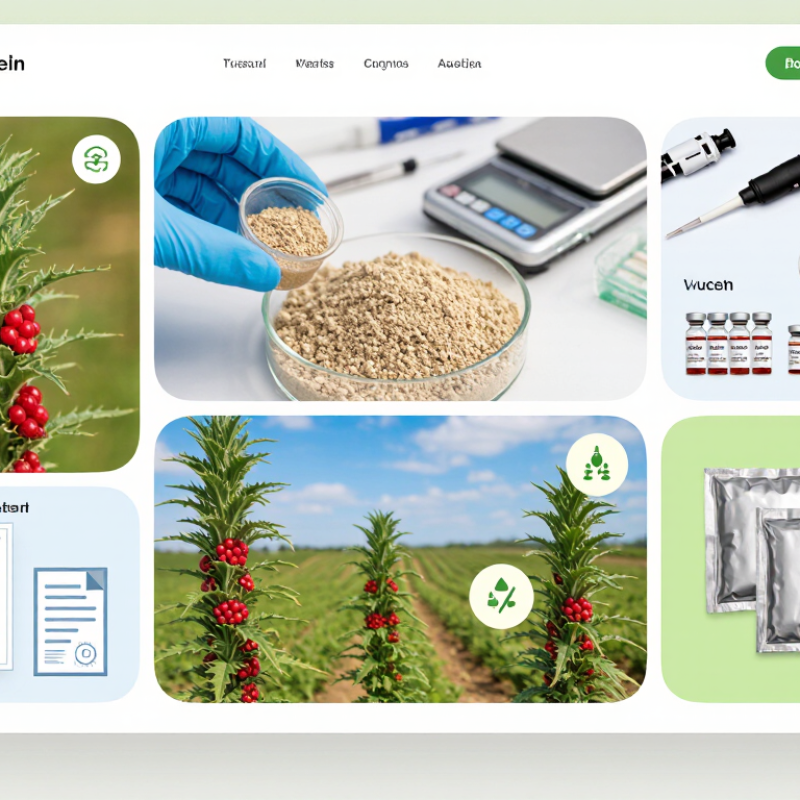
Finding a reliable Ruscus Extract Powder supplier requires more than comparing prices or reading polished product pages. The powder may look uniform in a photograph, yet its quality depends on botanical identity, harvest conditions, extraction methods, and storage. Ruscus aculeatus should be clearly identified, including the plant part used and the extract ratio. Small details matter.
Dr. Stefania Gafner, a respected botanical quality expert, has said, “The quality of a botanical product depends on the quality of the raw material.” This principle applies directly to Ruscus Extract Powder. A dependable supplier should provide a recent certificate of analysis for each batch. The document should show identity testing, active-marker results, microbial limits, heavy-metal screening, and residual-solvent data. Independent laboratory verification adds confidence, especially when claims appear unusually impressive.
Look beyond the certificate. Ask where the material was cultivated, how it was dried, and whether the supplier controls moisture during packing. A sealed bag is useful, but it does not prove consistent quality. Request a representative sample, then check its color, odor, flow, and test results against the specification. Some suppliers respond clearly. Others avoid simple questions. That is revealing.
This guide examines practical ways to assess Ruscus Extract Powder suppliers, from documentation and manufacturing controls to communication and batch consistency. It does not pretend that one inspection answers everything. Supplier evaluation is an ongoing process. Records can change. Standards can drift. Careful buyers should review evidence repeatedly, not rely on a confident sales message.
What Is Ruscus Extract Powder and What Is It Used For?
Ruscus extract powder comes from Ruscus aculeatus, commonly called butcher’s broom. It is usually produced from the plant’s underground rhizomes. These tissues contain steroidal saponins, including ruscogenins, which are important quality markers. The powder may range from pale beige to light brown, depending on processing and concentration.
What is it used for? In supplements, it is traditionally used to support healthy circulation and maintain comfortable legs. Some formulations target feelings of heaviness, mild swelling, or tired legs after prolonged standing. Cosmetic products may include it in creams designed for refreshed-looking skin. However, ruscus extract is not a cure. Human evidence varies, and product quality can affect results. That point is often overlooked.
Tips: Choose a supplier that provides a current certificate of analysis, botanical identification, and clear extraction details. Check the stated marker content, moisture level, microbial results, heavy-metal testing, and pesticide screening. Batch traceability matters. So does storage. Heat, humidity, and poor packaging can reduce powder stability. Ask for samples before placing a large order. Compare the sample’s color, odor, flow, and laboratory results. A reliable supplier should answer specific questions without vague promises. My own caution is simple: an attractive specification sheet is not enough. Independent testing may still be worthwhile, especially for products intended for regular consumption.
Which Quality Standards Should a Ruscus Extract Powder Supplier Meet?
A reliable ruscus extract powder supplier should prove quality beyond a polished website. The supplier should identify the Ruscus species, plant part, origin, and harvest period. A botanical identity test, such as HPTLC or DNA confirmation, reduces substitution risks. The supplier should also explain the extraction method and solvent residues. Always request a current certificate of analysis for each batch. Generic documents are not enough.
The certificate should report marker compounds, moisture, ash, particle size, and microbiological limits. It should also cover heavy metals, pesticide residues, aflatoxins, and residual solvents. Results need laboratory methods, acceptance limits, dates, and batch numbers. Testing by an ISO/IEC 17025 laboratory adds credibility. Good suppliers follow GMP and maintain traceable records from raw material to shipment. Small details matter.
Storage evidence matters too. Request stability data, packaging specifications, and recommended temperature and humidity ranges. A sealed, light-protective container can help preserve powder quality during transport. I would not choose based on price alone. Low quotes may hide weak testing or inconsistent sourcing. No supplier is perfect, and certificates can become outdated. A direct audit or sample retest may reveal gaps before a long-term purchase.
How to Verify a Supplier’s Raw Materials and Manufacturing Process
How to Find a Reliable Ruscus Extract Powder Supplier
Raw-material verification should begin with plant identity, not a polished sales sheet. The WHO Global Report on Traditional and Complementary Medicine 2019 recorded traditional medicine use in 170 of 194 Member States. That wide use increases the need for consistent botanical control. Ask for the full Latin name, plant part, harvest location, harvest season, and a voucher specimen. Ruscus root and other plant materials should not be treated as interchangeable.
Request a batch-specific certificate of analysis. It should show identity testing, marker compounds such as ruscogenin, microbial limits, heavy metals, pesticides, aflatoxins, moisture, and residual solvents. The WHO Quality Control Methods for Herbal Materials recommends combining visual, microscopic, and chromatographic checks. One test is rarely enough. Paper is not proof. An independent ISO/IEC 17025 laboratory should confirm critical results, especially when the supplier’s laboratory also sells the material.
Manufacturing records deserve equal attention. Ask for extraction solvent, drug-to-extract ratio, drying temperature, milling controls, cleaning procedures, and batch traceability. A credible facility can explain how it prevents cross-contamination and retains samples. Review GMP and HACCP documentation, but do not accept certificates without scope and expiry dates. I would also compare two or three batches, because one excellent sample may hide unstable sourcing. Supplier audits are useful, yet imperfect; a short video tour cannot replace records, testing, and honest answers about failed batches.
| No. | Verification Dimension | What Reliable Documentation or Data Should Show | Recommended Verification Method | Suggested Acceptance Criteria | Priority | Verification Status |
|---|---|---|---|---|---|---|
| 1 | Botanical identity | Ruscus aculeatus L., including the accepted plant part such as rhizome or root, should be clearly stated on the specification and batch documents. | Compare the botanical name, plant part, country of origin, and supplier specification. Confirm identity using macroscopic or microscopic examination and a validated chromatographic fingerprint where applicable. | Scientific name and plant part are consistent across the purchase specification, certificate of analysis, label, and batch records. | Critical | Required |
| 2 | Raw-material traceability | Each lot should be linked to harvest or cultivation records, supplier records, receiving records, processing dates, and a unique batch number. | Request a sample traceability exercise from finished powder back to the original raw-material lot and forward to distribution records. | Complete one-step-back and one-step-forward traceability is available and can be demonstrated within the supplier’s documented response time. | Critical | Required |
| 3 | Geographical and cultivation information | The growing or collection region, cultivation or wild-collection status, harvest season, and applicable collection controls should be recorded. | Review origin declarations, supplier questionnaires, harvest records, and sustainability or collection-control documents where relevant. | Origin is specific enough to support risk assessment, and the information is consistent with the batch documentation. | High | Required |
| 4 | Raw-material authentication | Identity testing should distinguish Ruscus material from visually similar plants, undeclared substitutes, and adulterants. | Use a qualified laboratory for botanical microscopy, chromatographic fingerprinting, and DNA-based testing when appropriate for the material and processing level. | Identity conforms to the approved reference profile; no unexplained peaks or evidence of substitution are found. | Critical | Required |
| 5 | Marker compounds and assay | The specification should identify the declared active or marker compounds, commonly including steroidal saponin markers such as ruscogenin and neoruscogenin, when applicable to the product. | Review the analytical method, reference standards, chromatograms, calculation basis, method validation or verification records, and results from multiple batches. | Assay meets the agreed product specification, with the analytical basis clearly defined as extract, dry basis, or another stated basis. | Critical | Required |
| 6 | Extraction ratio and solvent | The extract ratio, extraction solvent or solvent system, concentration steps, and carrier materials should be declared. | Compare the product specification with the master manufacturing record and batch manufacturing record. Check that all permitted processing aids are disclosed. | Extraction ratio and solvent information are complete, consistent, and suitable for the intended regulatory and product application. | Critical | Required |
| 7 | Manufacturing quality system | The facility should operate documented GMP, HACCP, ISO 22000, or an equivalent food, botanical, or dietary-supplement quality system appropriate to the intended use. | Review current certificates, scope, issuing body, expiry date, audit reports, corrective actions, and the manufacturing site covered by the certificate. | Certification scope covers the actual product and site; significant audit findings have documented corrective actions. | Critical | Required |
| 8 | Supplier qualification | Critical raw-material suppliers should be approved through documented risk assessment, questionnaire review, testing, and periodic performance evaluation. | Request the supplier-approval procedure, approved-supplier list excerpt, incoming-testing plan, and recent quality-performance records. | Critical suppliers are qualified before use and periodically re-evaluated using defined criteria. | Critical | Required |
| 9 | Microbiological quality | The certificate of analysis should report total aerobic microbial count, yeast and mold, and relevant specified pathogens according to the intended market and product category. | Verify that methods are recognized or validated and that the laboratory reports units, detection limits, sample identification, and test dates. | Results comply with the agreed specification and applicable legal or pharmacopeial requirements for the intended use. | Critical | Required |
| 10 | Heavy metals and elemental contaminants | Testing should cover relevant elements such as lead, cadmium, mercury, and arsenic, with the analytical units and sample basis clearly stated. | Review recent laboratory reports, preferably using a suitable instrumental technique such as ICP-MS or ICP-OES, and compare results with destination-market limits. | All reported elements comply with the legal limits or customer specification applicable to the final intended product. | Critical | Required |
| 11 | Pesticide residues | The testing program should reflect the cultivation or collection origin and include the pesticide panel required by the destination market. | Review the multi-residue method, laboratory accreditation status, reporting limits, and results from representative production lots. | No residue exceeds applicable maximum residue limits; substances without a permitted limit are controlled at the relevant reporting or action level. | Critical | Required |
| 12 | Mycotoxins and other natural contaminants | Risk-based testing should address contaminants relevant to dried botanical materials, including aflatoxins and ochratoxin A where required by the market or risk assessment. | Review the documented risk assessment, sampling plan, analytical method, and results for representative lots. | Results comply with applicable regulatory limits or the approved customer specification. | Critical | Risk-Based |
| 13 | Residual solvents | If organic solvents are used during extraction, the specification should identify possible residues and the applicable limits. | Confirm the solvent list in the manufacturing record and review residual-solvent results using a suitable validated method such as gas chromatography. | Residual solvents comply with applicable limits for the intended product category and market. | Critical | Required |
| 14 | Adulteration and undeclared ingredients | The finished powder should not contain undeclared carriers, dyes, preservatives, pharmaceuticals, synthetic marker compounds, or other plant extracts. | Review the full composition statement, allergen statement, manufacturing flow, and independent identity or authenticity testing. | Composition matches the agreed specification, and no undeclared ingredient or economically motivated adulterant is detected. | Critical | Required |
| 15 | Drying and moisture control | Drying conditions, final moisture or loss-on-drying, and water activity controls should be defined to reduce microbial growth and caking risk. | Review process parameters, batch records, moisture results, water-activity data where used, and packaging controls. | Moisture and water activity remain within the approved specification throughout the stated shelf life. | High | Required |
| 16 | Powder uniformity and physical properties | The specification should define appearance, color, odor, particle size, bulk density, solubility or dispersibility, and foreign-matter limits where relevant. | Compare the product specification with batch test results and inspect representative retention samples. | Results fall within established ranges and show no unexplained batch-to-batch variation. | High | Required |
| 17 | Sampling plan | Sampling should be representative of the entire lot and should consider container number, batch size, powder homogeneity, and contamination risk. | Review the written sampling procedure, sample quantities, sampler training, sample labels, and chain-of-custody records. | Sampling is documented, representative, protected from contamination, and traceable to the tested lot. | Critical | Required |
| 18 | Certificate of analysis | Each commercial lot should have a signed or electronically authenticated certificate showing batch number, manufacturing date, retest or expiry date, test methods, specifications, and actual results. | Compare the certificate with the batch label, purchase order, laboratory report, and approved specification. Confirm that results are not copied across unrelated lots. | Certificate is complete, lot-specific, internally consistent, and issued by an authorized quality representative. | Critical | Required |
| 19 | Independent laboratory confirmation | High-risk botanical identity, assay, contaminant, and authenticity results should be independently confirmed at a defined frequency. | Send pre-shipment or received samples to a qualified independent laboratory and compare the results with the supplier’s certificate. | No material discrepancy is found; any difference is investigated through a documented deviation or out-of-specification procedure. | Critical | Periodic |
| 20 | Stability and shelf life | Shelf life should be supported by real-time or appropriately designed stability data under defined packaging and storage conditions. | Review stability protocols, time points, storage conditions, packaging configuration, marker-compound assay, moisture, and microbiological results. | Quality attributes remain within specification through the stated shelf life under the recommended storage conditions. | High | Required |
| 21 | Packaging and storage | Packaging should protect the powder from moisture, light, oxygen, contamination, and physical damage. Storage conditions should be stated. | Inspect packaging materials, closure integrity, inner liners, labels, warehouse controls, temperature records, and pest-control records. | Packaging is food- or product-contact appropriate, intact, correctly labeled, and stored under controlled conditions. | High | Required |
| 22 | Change control | Changes to plant origin, raw-material supplier, extraction solvent, process parameters, carrier, specification, or manufacturing site should be formally assessed and approved. | Review the change-control procedure and recent change notifications. Confirm that customers are notified before changes affecting quality are implemented. | Changes are documented, risk-assessed, approved, and communicated according to the quality agreement. | Critical | Required |
| 23 | Deviation, complaint, and recall system | The supplier should maintain procedures for deviations, complaints, CAPA, product withdrawal, and recall, including effectiveness checks. | Review anonymized examples, response timelines, root-cause investigations, CAPA closure evidence, and mock-recall results. | Issues are investigated promptly, root causes are addressed, and recall traceability can be demonstrated. | Critical | Required |
| 24 | On-site or remote audit readiness | The supplier should permit a documented quality audit covering raw-material receipt, testing laboratories, extraction, drying, packaging, warehousing, and records. | Perform a risk-based audit and verify that observed practices match procedures and supplied documents. | No unresolved critical finding remains before approval; major findings have agreed corrective-action deadlines. | Critical | Required |
| 25 | Commercial and technical consistency | Price, lead time, minimum order quantity, annual capacity, specification, and sample results should be consistent with the proposed supply arrangement. | Compare quotation data, technical documents, sample batches, production capacity statements, and contract or quality-agreement terms. | Commercial commitments do not conflict with validated capacity, quality requirements, or documented manufacturing controls. | High | Required |
What Documents and Tests Should You Request Before Buying?
When evaluating a Ruscus extract powder supplier, request documents before discussing price. A current Certificate of Analysis should identify the plant part, extraction ratio, marker compounds, batch number, and production date. The specification sheet must match the product you will receive. Check the botanical name carefully. Common names can hide substitution risks.
Ask for test reports covering identity, heavy metals, pesticides, microbial limits, and residual solvents. Results should show actual values, test methods, and acceptance limits. “Pass” alone is not enough. Prefer reports from an independent laboratory with recognized competence. Also request a manufacturing certificate, traceability statement, allergen declaration, and storage requirements. If the powder is standardized, confirm how the marker level was measured. Different methods can produce different numbers.
Order a small sample before placing a large purchase. Examine its color, odor, flow, and packaging, then compare them with the specification. Keep a sealed retain sample for later checks. I would also ask whether the supplier can provide stability data under stated storage conditions. It is easy to overlook moisture during shipping. That mistake can change powder behavior and microbial risk.
Do not accept copied reports with mismatched batch numbers. Verify the laboratory date, sample description, and supplier address. A supplier that answers slowly may still be legitimate, but vague answers deserve caution. I have found that documents can look complete while missing the actual analytical method. That detail matters. Request clarification in writing, and record every version before approval.
How to Compare Suppliers, Pricing, Packaging, and Delivery Terms
Choosing a reliable Ruscus extract powder supplier requires more than comparing the lowest quotation. Ask for the botanical name, extraction ratio, active compound specification, and batch-specific certificate of analysis. Testing should cover identity, assay, moisture, microbiological limits, heavy metals, and pesticide residues. A clear traceability system matters. You should be able to connect each batch with its raw material and production date.
Pricing can look simple but often hides extra costs. Compare the minimum order quantity, sample fees, testing charges, payment schedule, and shipping terms. Calculate the landed cost, not only the unit price. I have seen low quotations become expensive after customs handling and urgent freight. That mistake is easy to repeat. Request a written quotation with currency, validity period, lead time, and responsibility for damaged goods.
Packaging also affects product stability. Prefer food-grade or pharmaceutical-grade bags with a sealed inner liner, moisture protection, and an outer carton or drum suited to the shipment. Each package should show the batch number, net weight, production date, expiry or retest date, and storage conditions. Confirm whether the supplier can provide custom packaging without weakening quality controls. For delivery, compare standard and express options, dispatch location, tracking, insurance, and replacement procedures. A dependable supplier communicates delays early, although no supplier can promise perfect timing. Allow buffer days for inspection and transport.
FAQS
Ask for the complete Latin name, plant part, harvest location, and harvest season. Request a voucher specimen or equivalent identity record. Root material should not be treated as interchangeable with leaves or stems.
Plant identity can be checked visually, microscopically, and chromatographically. These methods reveal different problems. One result rarely tells the whole story. Paper is not proof.
It should report identity, marker compounds, moisture, microbial limits, heavy metals, pesticides, aflatoxins, and residual solvents. Results must match the exact batch number. Generic certificates deserve caution.
Yes, especially for critical results or expensive shipments. An independent laboratory with suitable competence can verify identity and safety data. I would not rely only on the supplier’s own laboratory.
Ask about extraction solvent, drug-to-extract ratio, drying temperature, milling controls, cleaning procedures, and batch traceability. Request evidence of cross-contamination controls. Retained samples are useful when a later dispute appears.
Compare two or three batches for identity, marker levels, moisture, and microbial results. One excellent sample may hide unstable sourcing. I have made that assumption before. It was too optimistic.
Calculate the landed cost, not just the unit price. Include minimum order quantities, sample fees, testing, customs handling, payment terms, shipping, and urgent freight. A cheap quote can become expensive.
Prefer sealed inner liners, moisture protection, and suitable outer cartons or drums. Labels should show batch number, net weight, production date, expiry or retest date, and storage conditions. Confirm tracking, insurance, delay notices, and replacement procedures. Allow buffer days.
Conclusion
Ruscus Extract Powder is a botanical ingredient commonly used in dietary supplements, herbal formulations, and personal care products. When selecting a supplier, buyers should first understand the extract’s intended use, plant source, active compounds, extraction method, and recommended storage conditions. A reliable supplier should follow recognized quality management and manufacturing standards, maintain consistent production controls, and provide clear information about identity, purity, potency, and contaminant limits.
Before purchasing, request documentation such as a certificate of analysis, specification sheet, safety data sheet, traceability records, and relevant testing reports. Verify that raw materials are properly identified, authenticated, and tested for microbial contamination, heavy metals, pesticides, and other quality risks. Comparing suppliers should involve more than price: evaluate product consistency, minimum order quantities, packaging protection, shelf life, lead times, shipping conditions, and communication. A transparent supplier with complete documentation, responsive service, and stable delivery terms is more likely to support long-term purchasing needs.

Blog Tags: