


Sourcing Motherwort Extract Powder wholesale requires more than comparing prices on a supplier list. Buyers need dependable botanical identity, consistent potency, and documentation that supports safe commercial use. A reliable supplier should provide the plant’s scientific name, extraction ratio, country of origin, batch number, and a clear specification sheet. These details help prevent costly misunderstandings.
Look beyond polished websites. Request recent certificates of analysis, microbiological results, heavy metal screening, pesticide testing, and residual solvent reports. Independent laboratory verification adds confidence, especially when purchase volumes are large. Ask how the supplier controls harvesting, drying, extraction, and packaging. A professional manufacturer should explain these steps without vague promises.
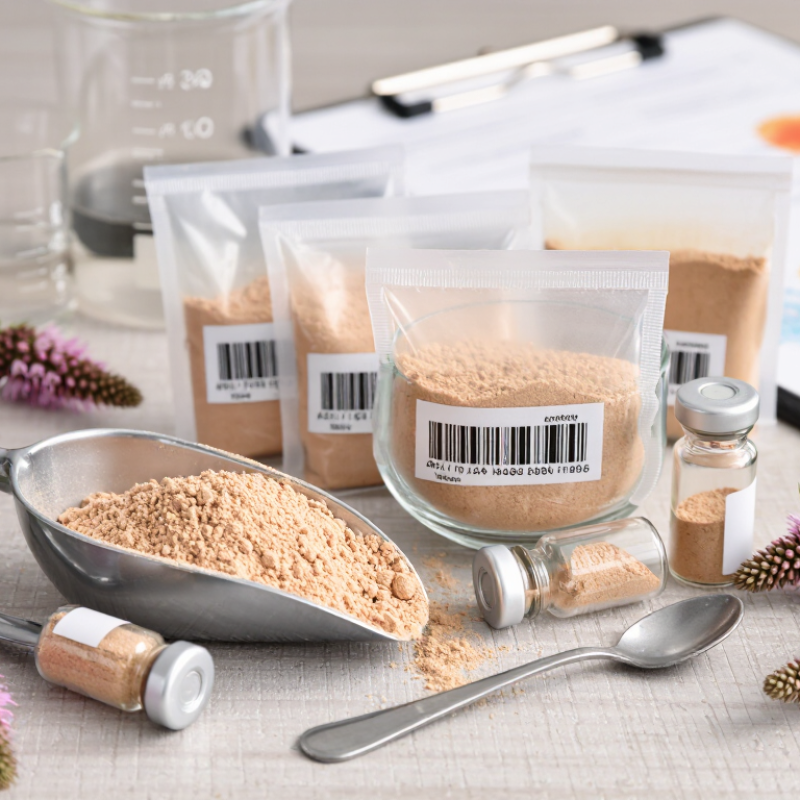
Small details matter. Check whether the powder arrives in sealed, food-grade bags with visible lot information. Confirm minimum order quantities, lead times, storage conditions, and replacement policies before signing an agreement. Samples should be evaluated for color, aroma, flowability, and laboratory results, not appearance alone.
Do not ignore regulatory responsibilities. Motherwort may be treated differently across markets, depending on its intended use and claims. Confirm applicable food, supplement, cosmetic, labeling, and import requirements with qualified local professionals. Supplier documents support compliance, but they do not replace it.
There is no perfect sourcing decision. A low price may hide weak traceability, while an impressive certificate may not reflect every production batch. This guide examines practical supplier checks, quality questions, and purchasing safeguards. The goal is simple: build a transparent supply chain for Motherwort Extract Powder with fewer surprises.
Understanding Motherwort Extract Powder and Its Wholesale Uses
When sourcing motherwort extract powder wholesale, start by understanding what the material actually is. Motherwort, commonly identified as Leonurus cardiaca, may differ in plant part, extraction ratio, and carrier content. These details change color, aroma, solubility, and final cost. A powder for capsules may not suit a tea blend or topical formula. Ask for a clear specification sheet before discussing volume.
Professional buyers should request a recent certificate of analysis for each batch. It should cover botanical identity, marker compounds, moisture, microbial limits, heavy metals, pesticides, and residual solvents. Confirm the extraction method and whether additives are present. Samples matter. Check each batch. Test the powder in your own process, not only in a supplier’s photograph. Wholesale reliability also includes stable lead times, sealed packaging, traceable lot numbers, and documented storage conditions. Local rules may restrict claims or require specific labeling, so review them with a qualified compliance professional.
Tips: Compare at least three samples using the same test procedure. Record odor, flow, dispersibility, and yield. Do not choose by price alone. A cheaper lot can create costly reformulation work. Still, specifications are not perfect; small variations can appear between harvests. Build a reasonable acceptance range, and keep retained samples for comparison. For larger orders, use a staged purchase instead of committing blindly. Keep written records for every lot.
| Data Dimension | Verified Information | Wholesale Sourcing Implication | Recommended Documentation or Check |
|---|---|---|---|
| Common Name | Motherwort | Use the standardized common name when comparing supplier quotations and product specifications. | Confirm that the common name matches the botanical identity shown on the specification sheet. |
| Botanical Name | Leonurus cardiaca L. | Botanical identification helps prevent substitution with other plants that may also be sold as motherwort. | Request the full botanical name, plant part, country of origin, and botanical identification method. |
| Plant Family | Lamiaceae, the mint family | Family information supports identity verification and helps distinguish motherwort from unrelated herbal materials. | Review the supplier’s botanical identity statement and, where appropriate, an authentication test. |
| Common Plant Part | Above-ground herb, generally collected during the flowering period | The plant part can affect the chemical profile, color, odor, and suitability for different formulations. | Ensure the purchase specification states whether the material is aerial parts, leaves, stems, or a defined combination. |
| Typical Extract Forms | Dry extract powder, powdered herb, or dry extract produced with a specified solvent system | “Extract powder” and “powdered herb” are not interchangeable; extract powders may be more concentrated than raw herb powders. | Request the extraction solvent, native extract ratio or DER, carrier details, and drying method. |
| Important Constituents | Motherwort contains reported alkaloids such as leonurine and stachydrine, together with iridoids, phenylpropanoids, flavonoids, and other plant constituents. | Constituent information can support batch comparison, but it should not be treated as proof of clinical effectiveness. | Ask whether testing covers a defined marker compound or only general identity and purity parameters. |
| Standardization | There is no single universal standardization level for all motherwort extract powders; specifications vary by product and market. | Do not compare prices without comparing the extract ratio, marker level, excipients, moisture, and particle specifications. | Obtain a current certificate of analysis for the exact batch offered. |
| Color and Appearance | Usually a green to brown or greenish-brown powder, depending on the plant material and extraction process. | Appearance is useful for preliminary inspection but cannot confirm identity or safety by itself. | Define acceptable color, odor, texture, foreign matter, and clumping limits in the purchase specification. |
| Wholesale Applications | Used as an ingredient in herbal tea blends, botanical powders, capsules, tablets, and other herbal preparations where legally permitted. | The intended application determines the required grade, particle size, microbial limits, packaging, and regulatory review. | State the intended market, dosage form, country of sale, and whether the ingredient is for food, supplement, cosmetic, or research use. |
| Quality Testing | Common checks may include botanical identity, moisture, total ash, microbial counts, heavy metals, pesticide residues, and mycotoxins, depending on the market and material. | A lower quoted price may reflect fewer tests or a less complete specification. | Compare the supplier’s test methods, acceptance limits, laboratory status, and test date. |
| Contamination Controls | Herbal powders can be exposed to microbial contamination, agricultural residues, heavy metals, adulteration, or cross-contamination during processing. | Risk-based testing is essential before approving a large wholesale order. | Request allergen, GMO, irradiation, pesticide, heavy-metal, residual-solvent, and foreign-matter statements when relevant. |
| Packaging Considerations | Dry extract powder should be protected from moisture, heat, light, and strong odors using clean, food-contact-compatible packaging. | Packaging quality affects shelf stability, handling, and transport losses. | Confirm net weight, inner liner, outer container, seal integrity, storage conditions, and lot-number traceability. |
| Shelf-Life Information | Shelf life depends on moisture, packaging, storage conditions, extract composition, and validated stability data. | Do not rely on a generic shelf-life statement for every batch or formulation. | Request the manufacturing date, expiry or retest date, recommended storage conditions, and stability support. |
| Documents to Request Before Purchase | Product specification, certificate of analysis, safety data sheet where applicable, technical data sheet, origin statement, and sample label. | Document review helps identify specification gaps before samples or bulk material are purchased. | Check that all documents refer to the same product name, botanical identity, lot number, and manufacturing date. |
| Sample Evaluation | Evaluate identity, appearance, odor, solubility or dispersibility, bulk density, moisture, and laboratory results against the agreed specification. | A representative sample should be approved before negotiating a recurring wholesale supply. | Retain an approved reference sample and define the procedure for handling out-of-specification batches. |
| Regulatory and Labeling Review | Permitted uses, health claims, maximum levels, warnings, and labeling rules vary by country and product category. | A raw material may be acceptable for one market or application but restricted in another. | Obtain a local regulatory assessment before making health claims or marketing finished products. |
| Safety Considerations | Motherwort is traditionally associated with cardiovascular and menstrual applications, but safety and suitability depend on the person, preparation, and dose. Pregnancy, breastfeeding, medication use, and medical conditions require professional advice. | Wholesale buyers should avoid unsupported disease or treatment claims and include appropriate risk controls. | Review warnings, contraindications, interaction information, and claim requirements with a qualified regulatory or healthcare professional. |
| Order Planning | Wholesale order size should reflect forecast demand, shelf life, storage capacity, testing cost, and minimum order quantity. | Buying the largest available quantity is not always the most economical option if the material may age before use. | Compare sample, pilot, and bulk pricing together with lead time, shipping conditions, payment terms, and reorder availability. |
FAQS
State the exact Latin species, plant part, origin, harvest season, solvent, and extract ratio. Leonurus japonicus and Leonurus cardiaca are different species. They are not interchangeable.
Request a complete certificate of analysis for each production lot. It should include batch number, identity testing, marker compounds, moisture, and contaminant results. One sample report is insufficient.
Ask for microscopy, HPTLC, or HPLC identity testing. Check microbial counts, heavy metals, pesticides, aflatoxins, and residual solvents. Clean appearance proves little.
Request written prices using identical specifications. Compare extract ratio, particle size, moisture limits, testing, packaging, and delivery costs. Cheap can mislead.
Standard stock may begin around 25 kilograms. Custom extraction may require 100 kilograms or more. Ask before planning production.
Review recent batch records, warehouse humidity logs, cleaning procedures, and allergen controls. Independent laboratory testing adds useful confidence. A polished website proves little.
Yes, request retained samples from several production lots. Compare color, odor, solubility, and assay results. Small differences need investigation.
Confirm deposits, final payment timing, inspection rights, lead time, export packing, and warehouse delivery. A promised 60 days may become 90 days during harvest shortages. Put everything in writing.
Start with a small pilot order before committing to a full container. Keep a retained sample and review performance after delivery. My checklist may still be incomplete.
Conclusion
Sourcing Motherwort Extract Powder wholesale requires a clear understanding of its intended uses, technical characteristics, and purchasing requirements. Buyers should first define the desired extract ratio, botanical source, active compound content, appearance, solubility, moisture level, and microbiological limits. These specifications help ensure that the material is suitable for its planned application and can be evaluated consistently across different suppliers.
Reliable wholesale suppliers should be screened through documentation, production experience, sample evaluation, and communication quality. When comparing offers, consider more than the unit price: minimum order quantities, lead times, payment terms, storage conditions, and supply stability can significantly affect total purchasing costs. Before placing an order, request compliance documents, batch-specific testing reports, contaminant screening, and clear packaging details. Delivery conditions, labeling, shelf life, and shipping protection should also be confirmed in writing to reduce quality risks and support efficient, compliant procurement.