
0%

The 2026 search for the best Shiitake Mushroom Powder suppliers requires more than comparing price lists. Buyers need evidence of identity, processing control, and dependable delivery. Shiitake can arrive as a fine beige powder, yet its quality depends on cultivation, drying temperature, milling, and storage. A bright package proves little.

Industry data shows why this category deserves closer attention. Grand View Research estimates the global mushroom market reached approximately USD 50 billion in 2023, with continued growth expected through 2030. Its analysis includes culinary, functional, and processed mushroom products. FAOSTAT also tracks mushrooms and truffles as a major cultivated food category, confirming the scale of commercial production. However, these sources do not isolate every Shiitake Mushroom Powder application. That limitation matters.

Supplier evaluation should therefore combine market evidence with practical verification. Review certificates, batch specifications, moisture limits, microbial testing, heavy-metal screening, and allergen controls. Ask whether the powder uses whole mushrooms or discarded stems. Request a recent certificate of analysis, not a generic sample. Check the factory address, export history, packaging seal, and lot traceability. Small details often reveal large differences.

Reports from Mordor Intelligence and IMARC Group indicate expanding demand for mushroom-based ingredients, especially in food, nutrition, and clean-label formulations. Still, market forecasts can vary by definition and methodology. They are useful signals, not guarantees. The strongest 2026 suppliers will show consistent particle size, recognizable aroma, transparent sourcing, and responsive technical support. Sometimes, the cheapest offer is the most expensive mistake. This guide compares those factors carefully, while acknowledging that “best” depends on your formulation, compliance needs, and target market.
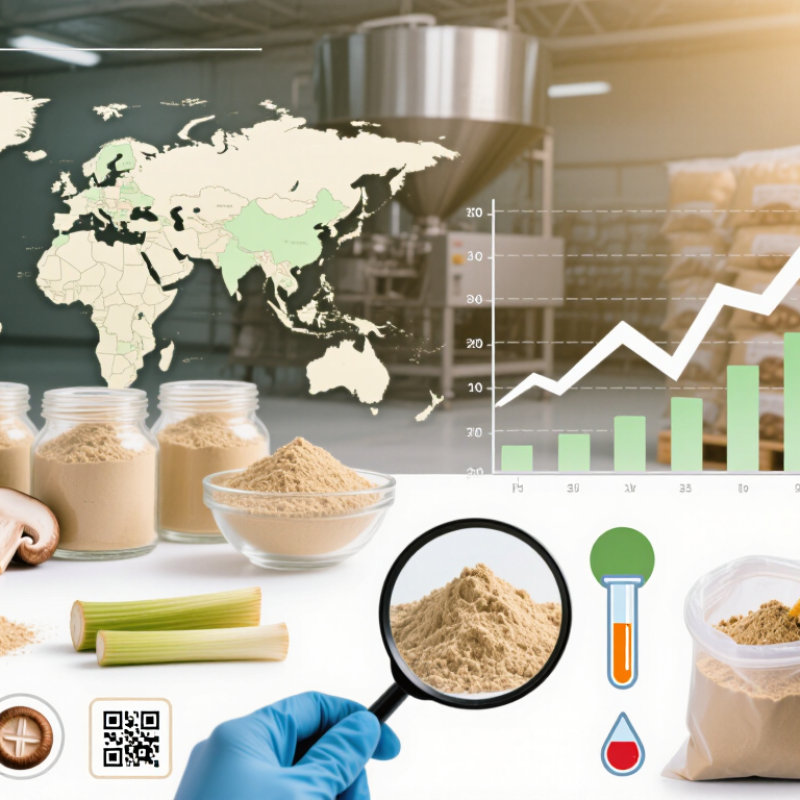
2026 Best Shiitake Mushroom Powder Suppliers?

What Is Shiitake Mushroom Powder and How Is It Made?

What Is Shiitake Mushroom Powder and How Is It Made?

Shiitake mushroom powder is made from dried shiitake fruiting bodies, not automatically from concentrated extracts. Fresh mushrooms are harvested, inspected, sliced, and dried with controlled heat. The dried material is then milled into a fine powder and screened for consistent particle size.

The process sounds simple. Quality control is not. Excessive heat can weaken aroma and darken the powder, while insufficient drying may encourage moisture-related spoilage. A reliable supplier should provide a certificate of analysis showing moisture, microbial results, heavy metals, and allergen controls. HACCP or ISO 22000 systems can also indicate structured food-safety management, although certification alone does not guarantee excellent flavor.

FAOSTAT’s 2022 dataset recorded more than 40 million tonnes of global mushroom and truffle production, showing the scale of modern cultivation. However, shiitake-specific figures are often grouped within broader mushroom categories. That limitation matters when comparing supplier claims. Industry market reports also identify dried and powdered mushrooms as expanding convenience formats, but their forecasts use different definitions and assumptions.

Look Closely at the Powder

It should smell earthy and savory, without sour or chemical notes. Natural color variation is not automatically a defect. I would still question unusually bright color or instant solubility. Powdered whole mushrooms usually leave some fine sediment; that is normal. A supplier should explain the raw material, drying temperature, milling method, packaging barrier, and batch testing history clearly.

Key Criteria for Evaluating Shiitake Mushroom Powder Suppliers

2026 Best Shiitake Mushroom Powder Suppliers?

Key Criteria for Evaluating Shiitake Mushroom Powder Suppliers

A reliable supplier should provide more than a bright powder and a polished website. Ask for the mushroom’s growing region, species identification, harvest date, and processing method. A clear certificate of analysis should show moisture, microbiological results, heavy metals, pesticides, and active compound testing. Check whether each result matches the specific production lot. Generic documents raise questions.

Experienced buyers should inspect the powder, not only the paperwork. Fine particles should flow evenly, while the aroma should suggest dried shiitake rather than smoke or chemicals. Excessive clumping may indicate moisture exposure. Request a small sample and compare its color, flavor, solubility, and sediment after mixing. Real testing matters.

Traceability separates serious suppliers from unreliable ones. The supplier should connect raw mushrooms to batch numbers, facility records, packaging dates, and storage conditions. Hygienic production, calibrated equipment, and independent laboratory testing add confidence. Ask how complaints are investigated and how rejected batches are handled. Their answers reveal practical experience.

No supplier is perfect. I would still question unusually low prices, dramatic quality claims, or results without testing dates. One overlooked detail can affect consistency. Packaging should protect the powder from light, oxygen, and humidity during transport. A dependable partner communicates clearly, admits limitations, and improves when evidence exposes a weakness.

Top Shiitake Mushroom Powder Suppliers to Consider in 2026

Top Shiitake Mushroom Powder Suppliers to Consider in 2026 should be judged by evidence, not polished websites.

Experienced buyers request a recent certificate of analysis for every production lot. The report should identify moisture, microbial limits, heavy metals, pesticides, and beta-glucan levels. Ask where the mushrooms were cultivated and how they were dried. A clean, earthy aroma and fine tan powder are useful signs, but sensory checks cannot replace laboratory testing.

Reliable suppliers provide traceability from the growing facility to the sealed pouch. Lot numbers should match invoices, test reports, and shipping records. Look for controlled drying temperatures, hygienic processing, and packaging that limits oxygen and moisture. Independent laboratory verification adds credibility, especially when the supplier explains its testing method.

Vague claims such as “premium quality” reveal little. Suppliers should also disclose allergens, country of origin, shelf life, and storage instructions for the intended market.

Small sample orders can expose practical problems. Does the powder clump after opening? Is the flavor consistent across batches? Can customer service answer technical questions quickly? No supplier is perfect. Harvests vary, and laboratories may report beta-glucan differently. I would record these weaknesses rather than hide them. A strong supplier responds with corrective actions, updated documents, and realistic lead times. Clear communication often matters as much as the mushroom itself.

How to Compare Quality, Certifications, Pricing, and Delivery

When comparing shiitake mushroom powder suppliers in 2026, start with measurable quality, not attractive photographs. USDA FoodData Central shows that dried shiitake contains substantial protein and dietary fiber, but processing can change concentration. Ask for a recent certificate of analysis, production date, moisture level, particle size, and beta-glucan testing. The report should also cover microbial counts, heavy metals, pesticides, and residual solvents. Do not accept “premium” without laboratory evidence. Small details matter.

Certifications & Traceability Certifications reveal process control, not automatic excellence. Check whether HACCP, ISO 22000, organic, or kosher certificates cover the actual factory and product scope. FAOSTAT production data shows the large scale of global cultivated mushroom supply, so traceability becomes essential. Request farm location, drying method, lot numbers, and recall procedures. Freeze-dried and hot-air powders may differ in aroma, color, and nutrient retention. I would compare samples from two lots. One sample can flatter a supplier.

Pricing should be calculated per usable kilogram, including testing, packaging, freight, duties, and minimum order quantities. A cheaper powder may contain more stems, higher moisture, or weaker flavor. Delivery needs equal scrutiny. Confirm Incoterms, lead time, shelf life remaining at shipment, humidity protection, and replacement terms for damaged cartons. The International Trade Centre’s trade data can help benchmark import prices, but it does not prove quality. Prices move with harvests and freight. Plan for that. Supplier claims still require independent verification.

Questions to Ask Before Choosing a Shiitake Powder Supplier

2026 Best Shiitake Mushroom Powder Suppliers?

Questions to Ask Before Choosing a Shiitake Powder Supplier

A reliable supplier should explain the mushroom’s species, growing region, and production method. Ask whether the powder comes from whole mushrooms or mainly stems. This difference affects flavor, texture, and nutritional value. Request a recent certificate of analysis for each batch. It should show moisture, microbiological results, heavy metals, pesticide screening, and nutritional markers.

Ask how the supplier controls drying temperatures and prevents cross-contamination. Excessive heat may weaken aroma and change the powder’s color. A clean, earthy smell is useful, but smell alone proves little. Request traceability from cultivation to packaging. The batch number should match the test report and shipping documents. Check whether testing comes from an independent laboratory.

Do not judge quality from a polished sample alone. A sample can hide inconsistent production. Ask for samples from different batches and compare their color, solubility, aroma, and particle size. Confirm minimum order quantities, shelf life, packaging layers, storage conditions, and lead times. Ask how complaints are investigated and how replacement decisions are made. Vague answers deserve caution.

A lower price may reflect weaker testing or unstable supply. Yet expensive powder is not automatically better. My checklist can still miss seasonal variation. Review documents carefully, then test the powder in your real product before committing. A trustworthy supplier welcomes reasonable questions and provides clear, verifiable records.

2026 Best Shiitake Mushroom Powder Suppliers? - Questions to Ask Before Choosing a Shiitake Powder Supplier

Evaluation Dimension Question to Ask the Supplier Evidence or Data to Request Practical Selection Benchmark Why It Matters
Botanical Identity Can you confirm the scientific name and mushroom species used in the powder? Product specification, botanical identification record, and batch documentation. Clearly identified Correct species identification helps prevent substitution, mislabeling, and inconsistent product performance.
Raw Material Form Is the powder made from whole fruiting bodies, mycelium, or a combination? Ingredient statement, manufacturing description, and percentage of each material. Composition is stated in measurable terms. Fruiting bodies and mycelium can differ in composition, processing requirements, and customer expectations.
Growing and Sourcing Information Can you provide the country or region of cultivation and the substrate used? Origin statement, supplier traceability records, and cultivation details. Origin and substrate are traceable by batch. Substrate and growing conditions may affect purity, consistency, and contaminant risk.
Processing Method How is the mushroom dried and milled? Process description covering drying temperature range, milling method, and use of carriers or additives. No undisclosed additives; processing is documented. Heat, moisture, and processing aids can influence flavor, color, solubility, and nutrient stability.
Moisture Content What is the maximum moisture specification for each batch? Recent certificate of analysis showing moisture results and test method. Common commercial specifications are often around 5%–10%; the buyer should confirm the agreed limit. Lower controlled moisture generally improves powder stability and reduces the risk of microbial growth.
Particle Size What mesh size or particle-size distribution does the powder meet? Particle-size specification and sieve-analysis report. Particle size is consistent with the intended use, such as capsules, beverages, seasoning, or bakery products. Particle size affects dispersion, mouthfeel, flowability, and filling accuracy.
Beta-Glucan Testing Do you test beta-glucans, and does the result distinguish mushroom beta-glucans from added cereal glucans? Third-party or validated laboratory report, analytical method, and result expressed on a defined basis. Results are batch-specific and the method is disclosed. Testing methodology and product composition can materially affect reported beta-glucan values.
Protein and Nutritional Data Can you provide a complete nutritional profile for the finished powder? Nutrition analysis covering calories, protein, carbohydrates, dietary fiber, fat, sodium, and serving basis. Values are supported by laboratory analysis rather than estimates alone. Reliable nutritional data is needed for labels, specifications, and regulatory review.
Microbiological Safety What microbiological limits does the product meet? COA showing total aerobic count, yeast and mold, and relevant pathogens such as Salmonella and E. coli. Results comply with the destination market and the buyer’s food-safety specification. Dry powders are not automatically sterile and can still carry microbial hazards.
Heavy Metals Are lead, arsenic, cadmium, and mercury tested for every production lot or according to a documented sampling plan? Recent laboratory report with units, detection limits, and test method. Results comply with applicable food regulations and customer limits. Mushrooms can accumulate environmental elements, making controlled sourcing and testing important.
Pesticide and Residue Control How do you control pesticides, fumigants, veterinary drugs, and other chemical residues? Residue-screening report, approved-farm policy, and corrective-action procedure. Testing scope reflects the cultivation region and intended market. Residue requirements vary by country, crop origin, and product category.
Allergen and Cross-Contact Controls Is the powder produced in a facility that handles common allergens? Allergen statement, facility profile, cleaning validation, and cross-contact controls. Allergen information is complete and consistent with the product label. Cross-contact can create labeling and customer-safety issues even when allergens are not ingredients.
Food-Safety Certification Which independently audited food-safety system covers the production site? Valid certificate, certification scope, issuing body, and expiration date. A recognized GFSI-benchmarked or equivalent food-safety system is preferred for commercial supply. Certification provides evidence that documented controls are reviewed by an external auditor.
Good Manufacturing Practices What controls are used for sanitation, pest management, foreign materials, and batch release? GMP procedures, audit summary, sanitation records, and release checklist. Controls are documented, implemented, and verified. Strong manufacturing controls reduce contamination, mix-ups, and inconsistent quality.
Certificate of Analysis Will you provide a COA for the exact lot supplied? Lot-specific COA containing product code, batch number, manufacturing date, test results, specifications, and approval signature. Lot-specific COA required A generic specification sheet cannot confirm the quality of the actual shipment.
Traceability and Recall Readiness Can you trace the finished powder back to raw-material and packaging lots? Traceability procedure, mock-recall results, and lot-coding format. One-step-back and one-step-forward traceability is available. Traceability supports investigations, targeted withdrawals, and regulatory compliance.
Packaging Protection What packaging is used to protect the powder from moisture, oxygen, light, and odor transfer? Packaging specification, food-contact declaration, seal information, and storage instructions. Packaging is sealed, food-grade, and appropriate for a hygroscopic powder. Suitable packaging helps preserve quality during storage and transportation.
Shelf Life and Storage What is the validated shelf life and required storage condition? Shelf-life statement, stability data, storage temperature, humidity guidance, and re-test policy. Shelf life is supported by documented stability information. Heat, humidity, oxygen, and repeated opening can accelerate quality deterioration.
Sample and Pilot Order Can you supply a representative sample before a commercial purchase? Sample COA, sample lot number, technical data sheet, and sensory evaluation procedure. Sample results are consistent with the proposed commercial specification. Sampling helps verify identity, flavor, color, dispersibility, and application performance.
Minimum Order Quantity What are the minimum order quantity and price breaks for different pack sizes? Written quotation showing MOQ, unit price, packaging format, tooling or setup charges, and payment terms. MOQ fits forecast demand and does not create excessive inventory exposure. Powder quality and cost must be evaluated together with working-capital and storage requirements.
Lead Time and Capacity What is the standard production lead time and available monthly capacity? Production schedule, capacity statement, holiday schedule, and business-continuity plan. Lead time is defined in writing and supported by a contingency plan. Reliable supply is essential when the powder is used in a continuous manufacturing process.
Regulatory Documentation Can you provide documents required for the destination country and product application? Ingredient statement, specification, allergen declaration, origin statement, non-GMO statement where applicable, and export documents. Documentation matches the destination market and intended use. Regulatory gaps can delay customs clearance, product registration, or customer approval.
Change-Control Policy How will you notify customers about changes to raw materials, processing, specifications, or production sites? Written change-control procedure and notification timeframe. Material changes require advance notice and customer approval when appropriate. Undisclosed changes may affect product claims, quality, labeling, and regulatory status.
Quality Agreement Will you sign a quality agreement defining specifications, testing, deviations, complaints, and recalls? Draft quality agreement and complaint-response procedure. Responsibilities documented A quality agreement clarifies accountability between the purchaser and supplier.

FAQS

What is shiitake mushroom powder made from?

It is usually made from dried shiitake fruiting bodies. Some products may contain more stems. Ask clearly.

How is shiitake mushroom powder produced?

Mushrooms are harvested, inspected, sliced, and dried with controlled heat. The dry material is milled and screened.

What should quality powder smell and look like?

It should smell earthy and savory, without sour or chemical notes. Natural color variation is normal. Extremely bright color deserves questions.

Should shiitake powder dissolve completely?

Not usually. Whole-mushroom powder may leave fine sediment at the bottom. Instant solubility is not automatically better.

Which documents should a supplier provide?

Request a recent certificate of analysis for each batch. It should include moisture, microbes, heavy metals, pesticides, and allergen controls.

How can buyers verify traceability?

Ask for the growing region, lot number, drying method, and packaging records. The batch number should match the test report.

How should different samples be compared?

Compare samples from multiple batches. Check color, aroma, particle size, sediment, and performance in your actual product.

What affects the real price of shiitake powder?

Calculate the usable cost per kilogram. Include testing, packaging, freight, duties, minimum orders, and possible damaged cartons.

What delivery details require attention?

Confirm lead time, storage conditions, humidity protection, remaining shelf life, and replacement terms. Cheap delivery can become expensive later.

Are certifications enough to prove excellent quality?

No. Certifications show process control, not perfect flavor or consistency. My checklist is useful, but it can still miss seasonal variation.

Conclusion

Shiitake Mushroom Powder is made by carefully drying mature shiitake mushrooms and grinding them into a fine, versatile powder. It can be used in soups, sauces, seasonings, supplements, and other food applications. When evaluating suppliers in 2026, buyers should consider mushroom origin, cultivation methods, processing standards, flavor, aroma, texture, and nutritional consistency. Reliable suppliers should provide clear product specifications, ingredient information, batch testing, and appropriate food safety certifications.

A thoughtful comparison should also examine pricing, minimum order quantities, packaging, shelf life, production capacity, delivery schedules, and customer support. Before choosing a supplier, ask whether the powder contains additives, how it is tested for contaminants, whether samples are available, and how quality is maintained between batches. By reviewing these factors together, businesses can identify a supplier that offers dependable Shiitake Mushroom Powder with consistent quality, transparent documentation, competitive value, and suitable delivery arrangements.

Sofia

Sofia

Sofia is a dedicated marketing professional specializing in the intricacies of our company’s product offerings. With an in-depth understanding of the market and an unwavering passion for her work, she plays a pivotal role in crafting informative and engaging content for our official blog. Her......